🌍 Top 10 Hangzhou Hometown Foods
Oct 24, 2026
1. 🇨🇳 Water caltrops are nuts with horns that grow in lakes
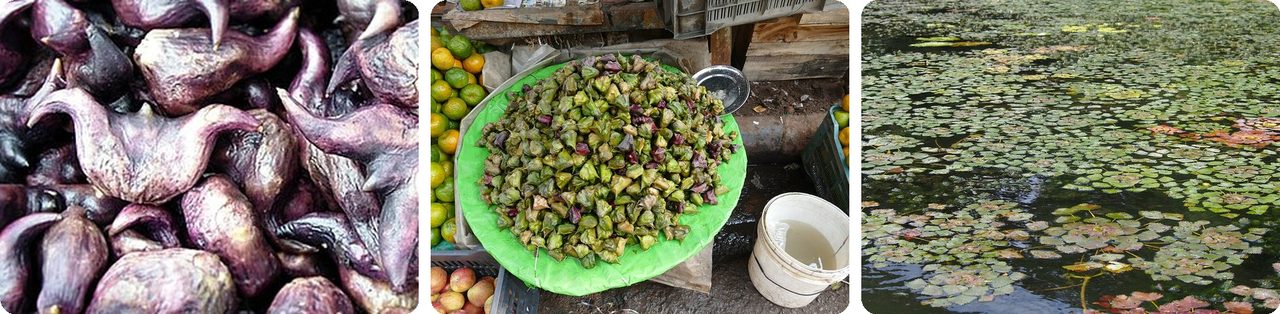 In the lakes and ponds of Zhejiang grows a floating plant with diamond-shaped leaves spread out in a circle. Under the water it makes a nut with two to four sharp horns, called 菱角 (líng jiǎo), the water caltrop.
The young ones are green and tender. These are 嫩菱 (nèn líng), "tender caltrops," the ones you peel and eat in autumn. As they ripen they turn dark red, so older ones are called 红菱 (red caltrops). One famous kind from Jiaxing, Zhejiang, called 南湖菱, stays green even when it's ripe.
People in China have grown water caltrops for at least 3,000 years. In old Japan, dried caltrops were scattered on the ground as spiky traps, sharp enough to poke through shoes. Chinese kids even have a tongue twister about them: 吃菱角,剥菱壳,菱壳丢在北壁角!
It's a nut wearing a pair of devil horns.
2. 🇨🇳 Water shield comes wrapped in its own natural jelly
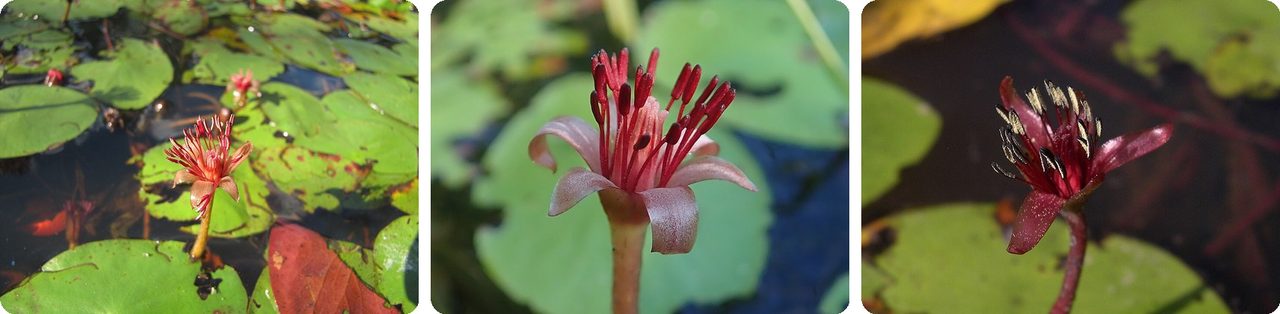 莼菜 (chún cài), water shield, is a pond plant with small oval leaves that float on top of the water. Everything underwater, from the curled-up baby leaves to the stems, is coated in a thick, clear, slippery jelly.
In Hangzhou, people pick those tiny jelly-covered shoots and cook them in a famous dish, West Lake Water Shield Soup (西湖莼菜汤). Water shield has almost no taste of its own. People love it for the way it feels: smooth and slippery, sliding down like little drops of jelly.
Its flowers have a funny trick. On day one, a flower pops up as a "girl" flower, then sinks. On day two it comes back up as a "boy" flower. And here's a surprise: water shield also grows wild in North America, even in beaver ponds.
Think of it as a vegetable that comes with its own Jell-O coat.
3. 🇨🇳 茭白 is a stem puffed up by a friendly fungus
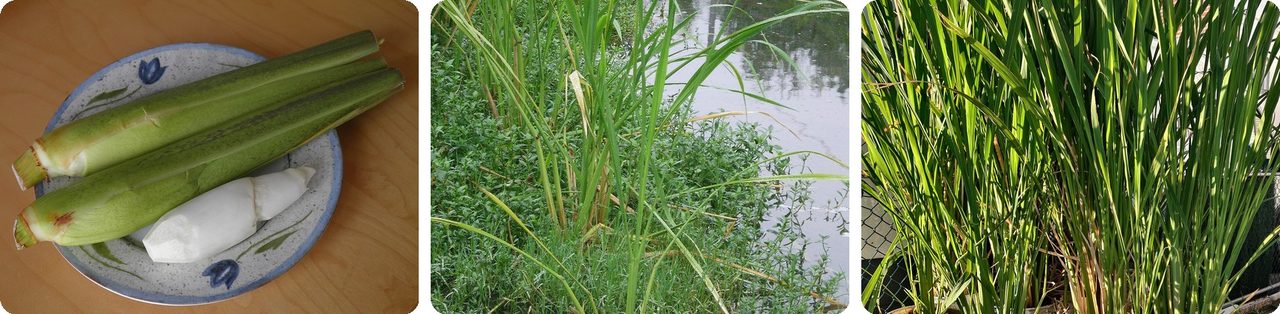 茭白 (jiāo bái), sometimes called water bamboo, comes from a tall wild rice grass. On its own, the grass is skinny. But a special fungus gets inside the stem → the stem's cells grow bigger and multiply → it swells into a juicy white stalk about as long as a pencil.
It tastes a bit like fresh bamboo shoot and stays crunchy when stir-fried. The best time to eat it is September to November. If the fungus grows the wrong way, the stalk fills with black spores instead, and long ago people used those spores to draw their eyebrows.
Here's why your friends have probably never tried it: the United States bans bringing 茭白 in, because the fungus could hurt America's own wild rice. And the common Chinese family name 蒋 (Jiǎng) comes from this very plant.
In other words, it's a vegetable that only exists because a plant caught a "cold."
4. 🇨🇳 Fox nuts grow inside a spiky "chicken head"
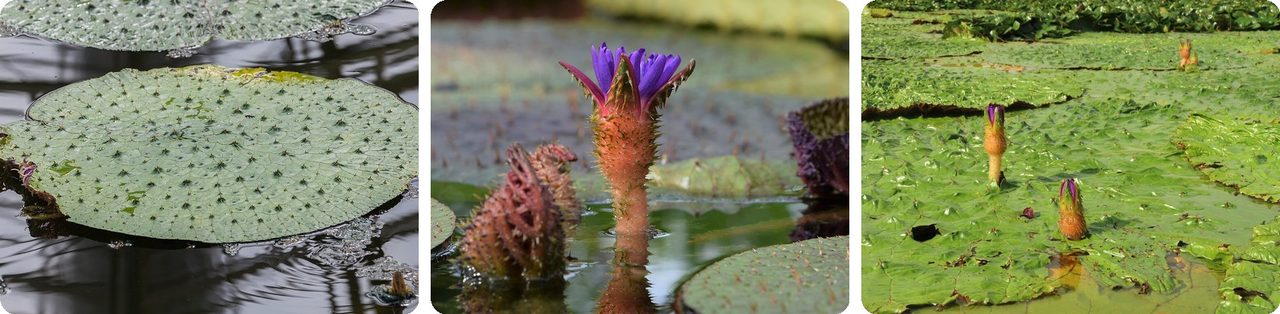 芡实 (qiàn shí), or fox nut, comes from a giant prickly water lily. Its round leaves are often more than a meter across and can reach 2.7 m, wider than a grown-up is tall, and its stems and leaves are covered in sharp prickles.
The fruit is a spiky ball 5 to 10 cm wide, packed with round seeds. With its pointed tip sticking up, it's easy to see why people nicknamed the seeds 鸡头米 (jī tóu mǐ), "chicken-head rice."
People around the Yangtze River, including the ancient village of Hemudu in Zhejiang, were gathering fox nuts thousands of years ago. In India they're called makhana and are often roasted like popcorn; India grows more than 90% of the world's fox nuts.
Basically, it's a water lily that guards its snacks with spikes.
5. 🇨🇳 Yangmei is Zhejiang's bumpy red summer berry
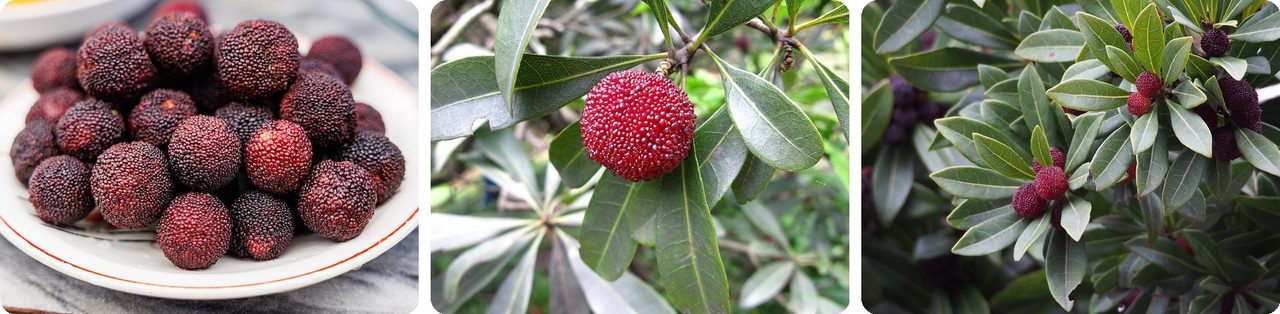 杨梅 (yáng méi), the Chinese bayberry, is a round, bumpy red fruit about 2 cm across, the size of a large grape. It has one big seed in the middle and juicy flesh that's sweet and very sour at the same time.
Its season is short. Yangmei ripens around late May and is mostly gone soon after the Dragon Boat Festival (端午节). The darkest purple-red ones are the ripest.
Zhejiang has loved this fruit for a very long time: yangmei pollen was found at the 5,000-to-7,000-year-old village of Hemudu in Yuyao. Today Yuyao calls itself China's "hometown of yangmei," and its most famous kind is named after the water chestnut, 荸荠种.
It's a summer treat that looks like a red pom-pom and tastes like sour candy.
6. 🇨🇳 Bamboo shoots can grow more than a meter in a day
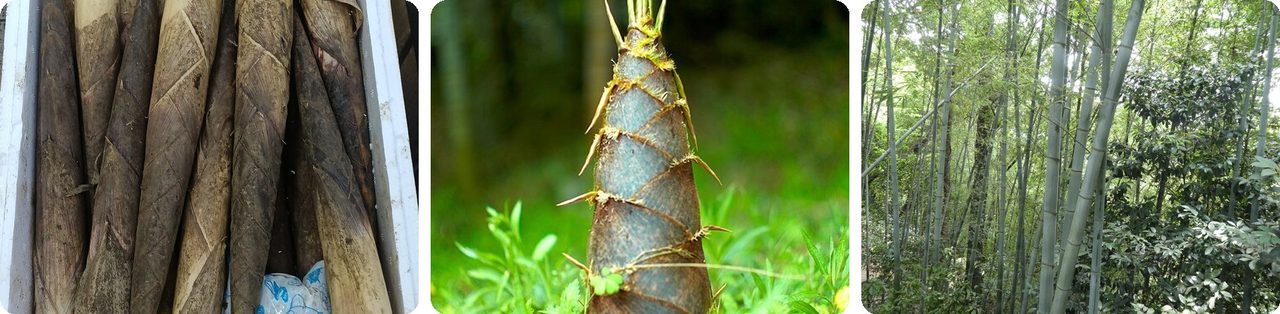 Moso bamboo, 毛竹 (máo zhú), is a giant bamboo from China, and its baby shoots, 笋 (sǔn), are a favorite food. Moso can shoot up 119 cm in 24 hours, about as tall as a six-year-old, and keeps going to 28 m, as tall as a 9-story building.
Winter shoots, 冬笋, are dug up before they poke out of the ground and are said to taste the best. Spring shoots, 春笋, are bigger. Families in Zhejiang and Jiangsu stir-fry winter shoots with pickled winter greens in a dish called 炒二冬, "fried two winters."
In Japan, moso bamboo is named after Meng Zong (孟宗), a boy in an old Chinese story. His sick mother wanted bamboo shoots in winter, so he cried in the bamboo grove, and shoots sprang up for him.
In other words, if you sat and watched, you could almost see dinner growing.
7. 🇨🇳 马兰头 is a wild spring daisy picked from rice-field edges
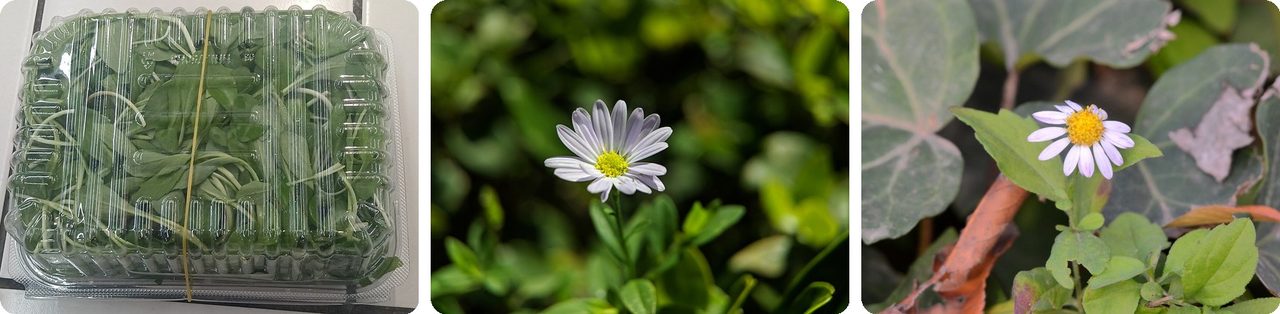 马兰头 (mǎ lán tóu) is a small wild plant, the Indian aster, that grows along roadsides, on hills and on the little ridges between rice fields. Later in the year it blooms with tiny daisies, light purple or white.
People pick its young leaves in early spring, around Qingming (清明) in early April, before it flowers. South of the Yangtze, the classic way to eat it is 香干拌马兰头: the greens mixed with diced pressed tofu (香干) as a cold dish. People treat it as a delicacy because of its special flavor.
The red-stemmed kind is said to be the best. It has also spread to California and Hawaii.
It's a roadside daisy that grew up to become a spring salad.
8. 🇨🇳 Chinese hickory nuts are cousins of the American pecan
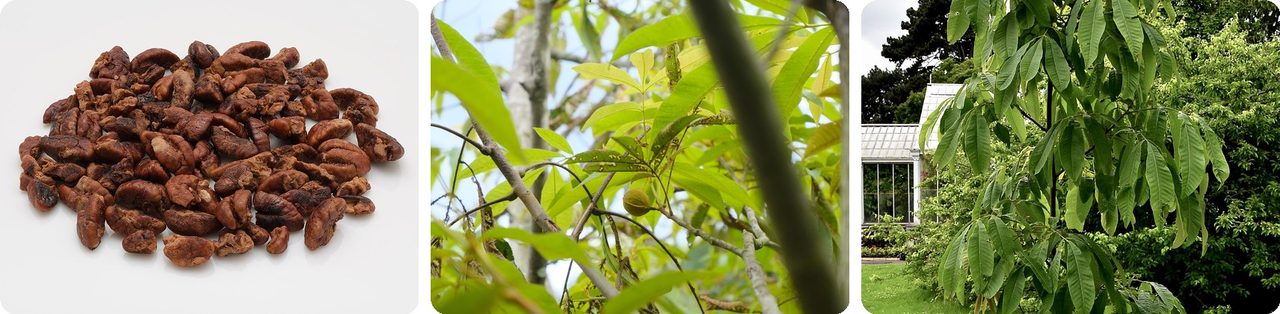 山核桃 (shān hé tao), the Chinese hickory, is a tree that grows on mountain slopes in Zhejiang and nearby provinces, about 20 m tall. It belongs to the same plant group, the genus Carya, as the American pecan and hickory.
People roast its nuts or turn them into candy, and press the oil for cooking. Peeled, roasted kernels, called 山核桃仁, are a famous Hangzhou specialty.
About 5,000 tons of nuts come from 16,000 hectares of trees, roughly the size of 22,000 soccer fields.
Think of it as the pecan's small, mountain-loving cousin.
9. 🇨🇳 香榧 nuts take three years to ripen on a "living fossil" tree
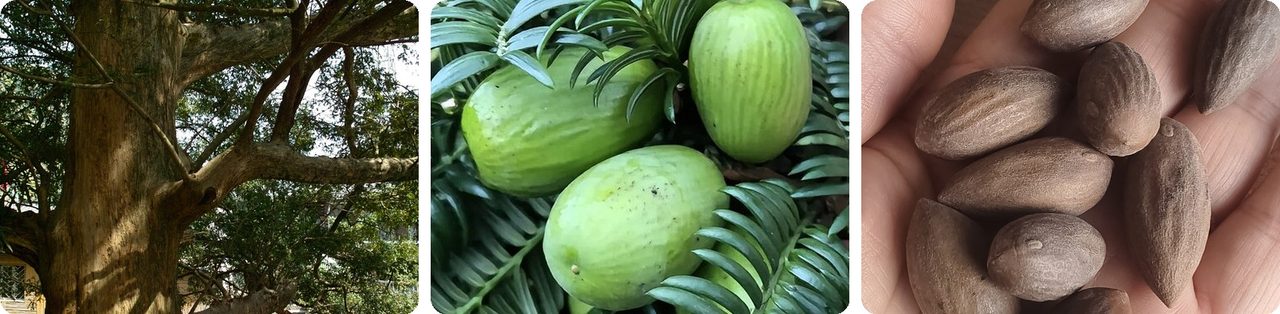 香榧 (xiāng fěi), the Chinese torreya, is an evergreen tree whose family goes back about 170 million years, to the time of the dinosaurs. It grows in Zhejiang places like Zhuji, Dongyang and Fuyang.
It's very patient. In the first year it flowers, in the second year the fruit forms, and only in the third year is the nut ripe. A single tree can keep producing for more than a thousand years.
The nuts are olive-shaped with a hard shell and are often roasted. In the Song dynasty, salt-and-pepper torreya nuts (椒盐香榧) were sent to the emperor as a special gift. Its wood is so fine it's used to make high-quality Go boards.
Basically, it's a snack that takes longer to grow than a kid spends in preschool.
10. 🇨🇳 Osmanthus is Hangzhou's sweet-smelling city flower
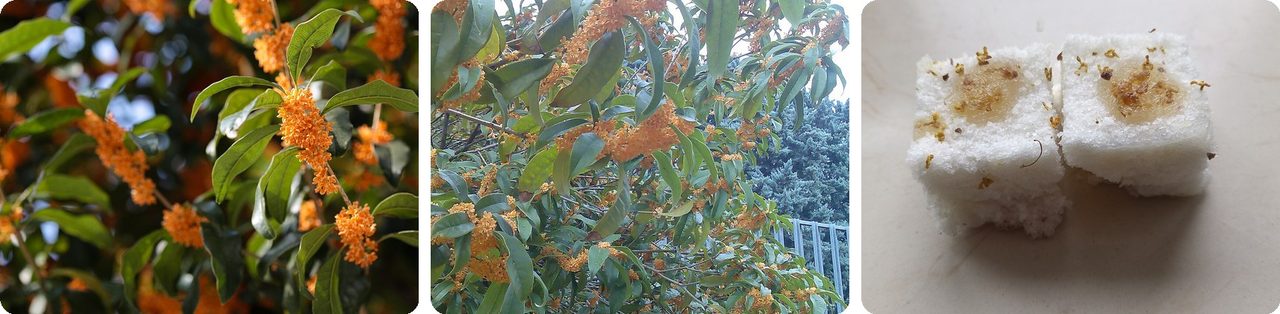 桂花 (guì huā), sweet osmanthus, is Hangzhou's official city flower. In late summer and autumn, right about now, its trees fill with clusters of tiny flowers only about 1 cm long, and the air smells sweet.
The scent is often compared to ripe peaches or apricots. The orange kind, 丹桂, is the one most used in desserts.
People add the flowers to tea, jam, cakes, dumplings and soups. One favorite is sweet rice balls (汤圆) with osmanthus in rice wine syrup.
It's a tree that makes the whole city smell like a bakery.
Fun fact
About 1,700 years ago, an official named Zhang Han (张翰) was working far from his home in Wu, south of the Yangtze. One autumn, the cool wind made him miss three foods from home: 菰菜 (the plant 茭白 grows on), 莼菜 soup and fresh perch. He said life is about doing what makes you happy, not chasing titles far from home, and went straight back. Chinese people still say 莼鲈之思, "longing for water shield and perch," to mean missing home. Next time: Chinese idioms and the surprising stories behind them.
Photo credits (Wikimedia Commons)
- #1: Water-caltrops.jpg by unknown, CC BY-SA 3.0
- #1: Burrabazar Market in Kolkata 09.jpg by Kritzolina, CC BY-SA 4.0
- #1: Trapa natans Kotewka orzech wodny Oława 2023-08-11 05.jpg by Agnieszka Kwiecień, Nova, CC BY-SA 4.0
- #2: Brasenia schreberi inat1.jpg by Sara Hollerich Giles, CC0
- #2: Brasenia schreberi 28983668.jpg by Laura Costello, CC BY 4.0
- #2: BraseniaAlt.jpg by No machine-readable author provided. Dacrycarpus~commonswiki assumed (based on copyright claims)., CC BY-SA 3.0
- #3: Wild rice stems.jpg by Micromesistius, CC0
- #3: Water bamboo.JPG by unknown, CC BY-SA 3.0
- #3: Zizania latifolia in cultivation.jpg by Leizhaoyn, CC BY-SA 4.0
- #4: Euryale ferox, Jardín Botánico, Múnich, Alemania, 2013-09-08, DD 02.JPG by Diego Delso, CC BY-SA 3.0
- #4: Euryale ferox kz05.jpg by Krzysztof Ziarnek, Kenraiz, CC BY-SA 4.0
- #4: Euryale ferox · Hualien, TW-TA, TW by (c) chiuluan, some rights reserved (CC BY), CC BY
- #5: Myrica rubra in China.jpg by Dinkun Chen, CC BY-SA 4.0
- #5: Yumberry Berries zoom in 2008.jpg by Carsten Ullrich, CC BY-SA 2.0
- #5: Chinese Bayberry (Myrica rubra) (19011153788).jpg by harum.koh from Kobe city, Japan, CC BY-SA 2.0
- #6: Bamboo shoots.jpg by Fumikas Sagisavas, CC0
- #6: Big Bamboo Shoot (Joi Ito).jpg by Joi Ito, CC BY 2.0
- #6: Phyllostachys edulis · Danxiashan Suodao, Renhua, Shaoguan, Guangdong, China by (c) Aaron Liston, some rights reserved (CC BY), CC BY
- #7: Aster indicus (RT-mart).jpg by Fumikas Sagisavas, CC0
- #7: Aster indicus-IMG 20180904 111233.jpg by Sun Jiao (Interaccoonale), CC BY 4.0
- #7: Aster indicus · 中国河南省郑州市金水区 by (c) Zinogre, some rights reserved (CC BY-SA), CC BY-SA
- #8: Carya cathayensis nuts.jpg by King of Hearts, CC BY-SA 4.0
- #8: Carya cathayensis · 中国浙江省杭州市临安区临安区太湖源镇高云村 by (c) 王天明, some rights reserved (CC BY), CC BY
- #8: Juglandaceae Carya cathayensis 1.jpg by NasserHalaweh, CC BY-SA 4.0
- #9: Torreya grandis.jpg by Farm, CC BY 3.0
- #9: Unripe torreya grandis fruit.jpg by Fumikas Sagisavas, CC0
- #9: Roasted Torreya grandis fruit placed in the palm of your hand.jpg by Fumikas Sagisavas, CC0
- #10: Osmanthus fragrans (orange flowers).jpg by Laitr Keiows, CC BY-SA 3.0
- #10: Osmanthus fragrans flowers.jpg by Achillu, CC BY-SA 3.0
- #10: Osmanthus cake.jpg by Fumikas Sagisavas, CC0


