🌍 Top 10 How to Be a Game Designer
Oct 20, 2026
1. 🇺🇸 Monopoly began as a game against greedy landlords
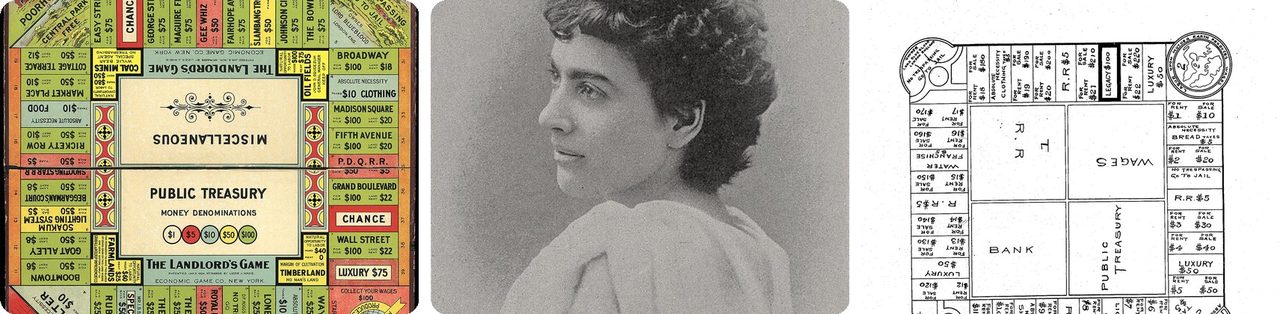 In 1902 and 1903, Lizzie Magie designed The Landlord's Game and playtested it in Arden, Delaware. She patented it in 1904. Its whole point was to show how rent makes property owners richer and renters poorer.
She hoped kids who played it would feel how unfair that was and remember it as adults. That's the first trick of game design: give your game a point, and let players feel it instead of reading it.
And here's the twist. Parker Brothers turned her game down in 1909 as too complicated. About 30 years later they published a reworked version called Monopoly, a man named Charles Darrow claimed he'd invented it, and Magie said she earned just $500 from her idea.
In other words, the world's most famous "get rich" game started as a warning about getting rich.
2. 🇯🇵 Zelda started with a boy exploring caves near Kyoto
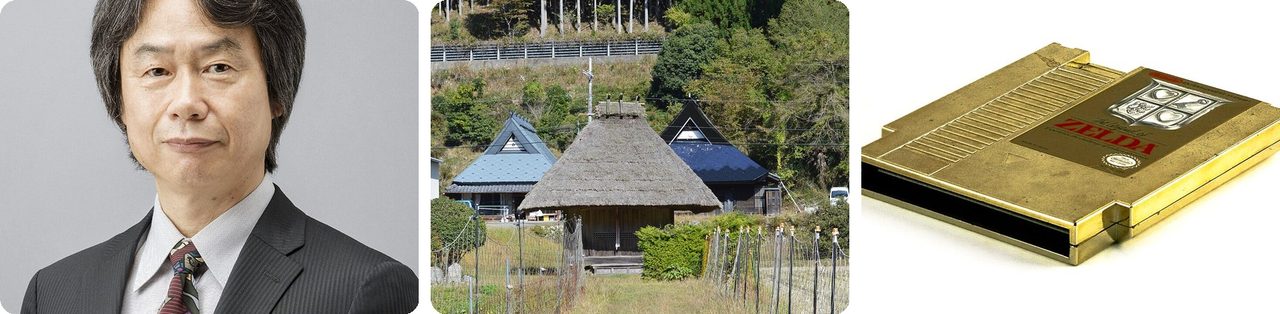 Shigeru Miyamoto grew up in Sonobe, a small town outside Kyoto, wandering its fields, woods and caves. He once found a cave and spent days working up the nerve to go inside.
Years later at Nintendo, he poured that feeling into The Legend of Zelda (1986). "When I was a child, I went hiking and found a lake," he said. "It was quite a surprise for me to stumble upon it." He wanted players to feel that same jolt of finding something nobody showed them.
He called the result a "miniature garden that they can put inside their drawer." The lesson: your own memories are design material. The best ideas often come from something you actually felt.
Basically, Zelda is a kid's summer adventure that fits in a box.
3. 🇷🇺 Tetris began as a childhood puzzle on a lab computer
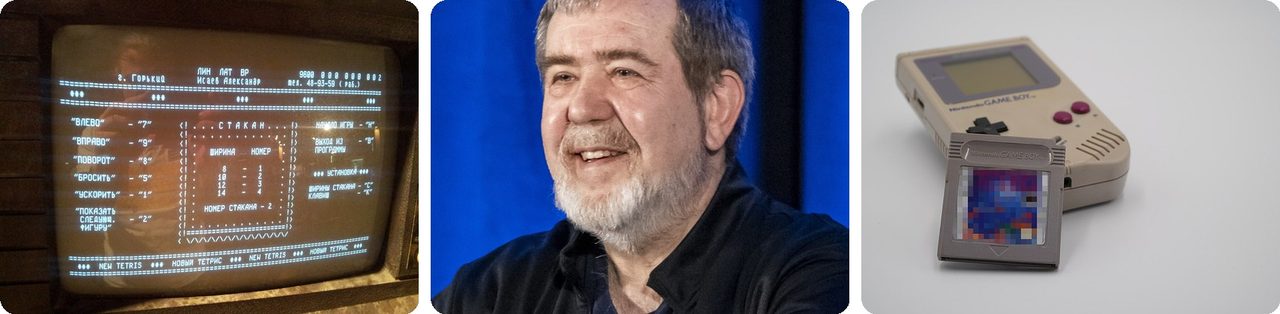 In the mid-1980s, Alexey Pajitnov was a researcher at a Soviet science lab in Moscow. He remembered pentominoes, a puzzle made of 12 shapes built from five squares each, and how hard it was to fit them back in their box.
Twelve shapes felt too complicated for a game, so he cut it down to seven shapes of four squares. His computer, an Elektronika 60, couldn't even draw pictures, so he built the pieces out of spaces and brackets.
The first version took about two weeks. Then he spent even longer playtesting and adjusting it, finishing on June 6, 1985. The lesson: start simple, then cut. Because he worked for the Soviet state, he didn't earn royalties until the mid-1990s.
It's the chore of packing away a puzzle, turned into the game nobody can put down.
4. 🇯🇵 Space Invaders speeds up because of a computer glitch
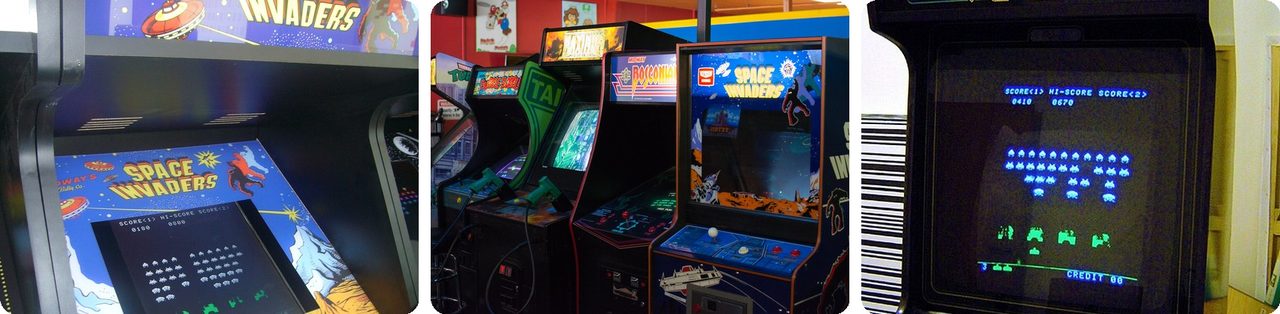 When Tomohiro Nishikado built Space Invaders for Taito in 1978, his computer chip was barely strong enough. It drew the screen faster when fewer aliens were left, so every alien you shot made the rest move faster, and the music sped up too.
Instead of fixing it, he kept it. The glitch became the game's rising tension: the closer you get to winning, the more frantic it feels.
His other limits shaped the game too. The machine couldn't show aircraft moving well, so the enemies became aliens, and it could only do a black background, so the game was set in space. By 1982 it had earned $3.8 billion.
Think of it as a bug that got promoted to final boss.
5. 🇺🇸 Pong's test machine "broke" because it was stuffed with quarters
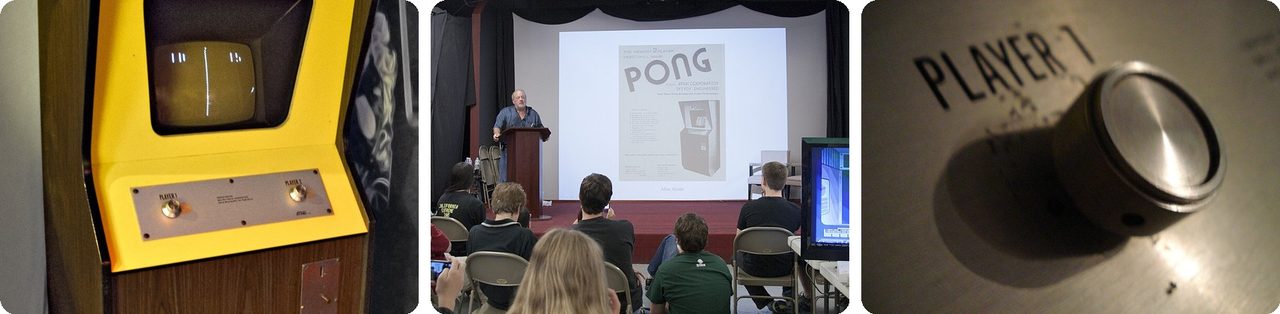 In August 1972, Atari's Nolan Bushnell and Allan Alcorn put a homemade Pong machine in a bar called Andy Capp's Tavern. Inside was a $75 black-and-white TV from a local store.
A few days later, the bar owner called: the machine was acting up. Alcorn opened it up and found the problem. The coin box was overflowing with quarters.
That told them more than any meeting could. Pong went on to earn about $35 to $40 a day, roughly 150 games, four times more than other coin machines. The lesson: test with real people, in the real place they'd play.
The best bug report ever written was a box too full of money.
6. 🇺🇸 SimCity grew out of a level editor
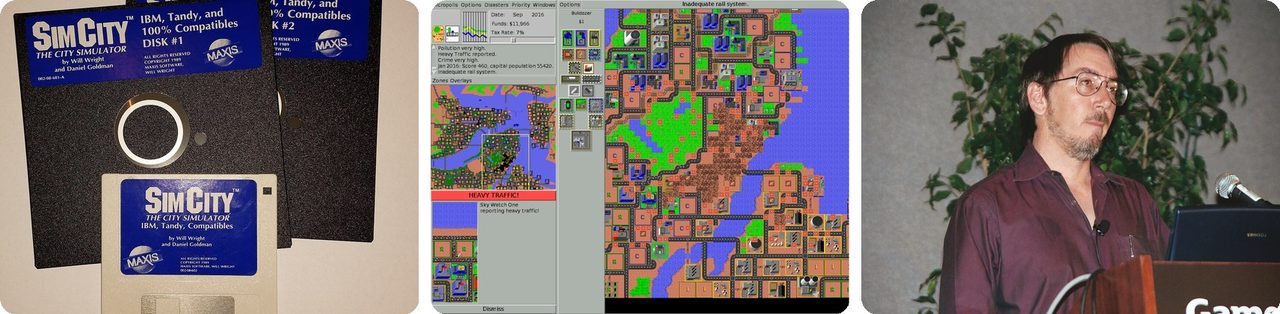 Will Wright's first game, Raid on Bungeling Bay (1984), was about flying a helicopter and bombing islands. But he had more fun building the islands with his level editor (the tool for making the maps) than he had playing the game.
So he turned the building part into its own game. It became SimCity (1989), though at first he struggled to find anyone willing to publish it.
He did it again later. After losing his house in a 1991 Oakland wildfire, rebuilding his life gave him the idea for a virtual dollhouse, which became The Sims. The lesson: notice which part you enjoy most, and make that the game.
It's like loving building the LEGO set more than playing with it, so you sell the building.
7. 🇺🇸 Dungeons & Dragons zoomed a war game in to one hero
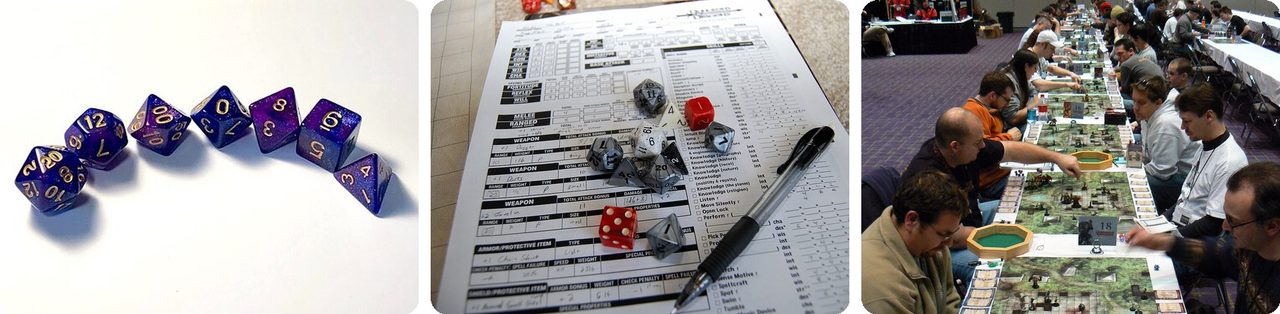 In the early 1970s, war-game fans moved armies of tiny figures around tables. Dave Arneson tried something new: each player controlled just one person instead of a whole army, using Gary Gygax's medieval rules, Chainmail, for the fights.
As they played, Arneson added the ideas every role-playing game uses today: character classes, experience points and leveling up. He and Gygax turned it into a game, and the first box came out in 1974 on a budget of $2,000, with only $100 for art.
The name was picked by Gygax's two-year-old daughter, Cindy: "Oh Daddy, I like Dungeons & Dragons best!" The lesson: take a game you love and change one big thing.
Take a chess army, hand each player one piece, and give that piece a life story.
8. 🇯🇵 A bored commuter's calculator inspired Nintendo's first handheld
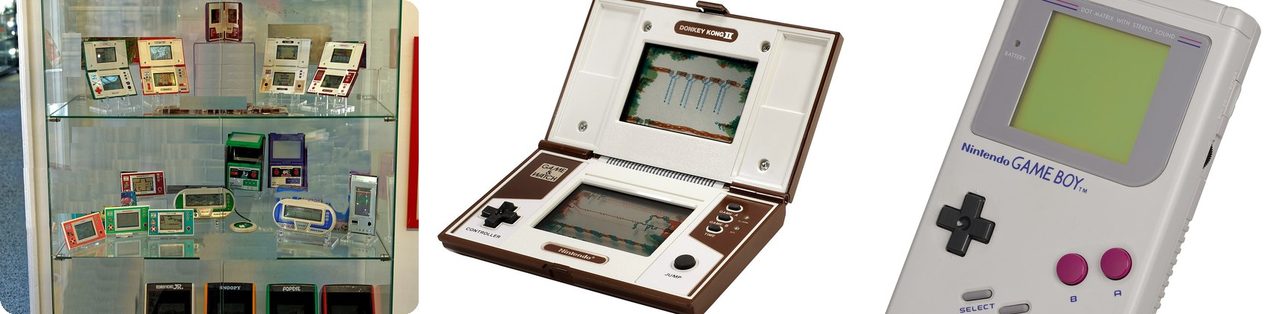 In 1979, Nintendo's Gunpei Yokoi was riding the bullet train when he saw a bored businessman pressing buttons on a pocket calculator just to pass the time. That gave him an idea: a credit-card-sized clock that was also a tiny game.
Calculator companies had been fighting a price war, so small LCD screens (the gray screens on calculators) were suddenly cheap. Yokoi used them to build the Game & Watch, which sold 43.4 million units and introduced the cross-shaped D-pad.
He called his rule "lateral thinking with withered technology": use old, cheap, reliable parts in a new way. The Game Boy followed it, picking a black-and-white screen over color to get longer battery life and a lower price.
Basically, he made the future out of yesterday's spare parts.
9. 🇺🇸 The first home video game console was a plain brown box
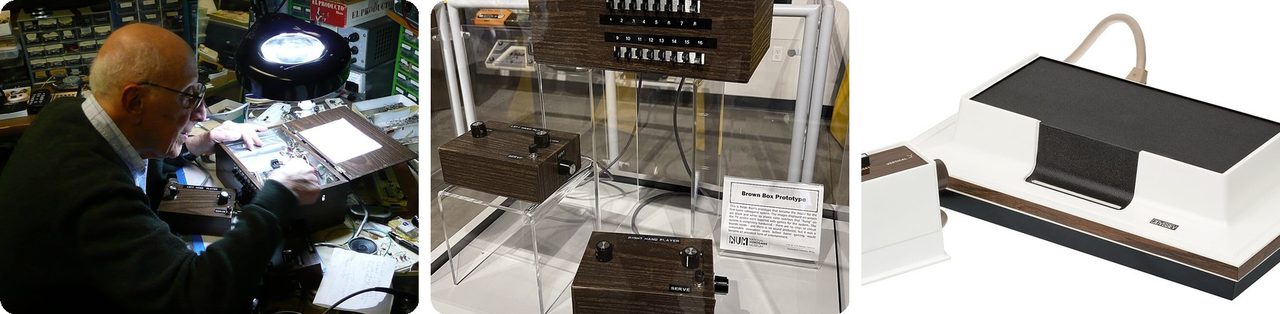 Ralph Baer was born in Germany, and his Jewish family fled just before World War II. Around 1966, while working as an engineer in Nashua, New Hampshire, he had a wild idea: playing games on an ordinary TV.
His bosses let him keep at it, and he built prototype after prototype until he had the "Brown Box". Magnavox licensed it, and in 1972 it became the Magnavox Odyssey, the first home video game console.
The lesson: build something people can hold and try. Baer kept inventing his whole life, with more than 150 patents, and is often called "the Father of Video Games."
The Brown Box was the rough draft of every console in your living room.
10. 🌍 Thousands of people make a whole game in one weekend
 At the Global Game Jam, people around the world get a surprise theme at 5 p.m. and have exactly 48 hours to finish a game. Strangers pitch ideas, form small teams, and show off what they made on the last afternoon.
It's open to anyone, from pros to total beginners. The first one, in 2009, had 1,650 people making 370 games. In 2019, teams at 860 sites in 113 countries made 9,010 games in a single weekend.
The lesson: finish small games, fast. Making lots of little games teaches you more than dreaming about one giant one.
Think of it as a weekend bake-off, but everyone bakes a game.
Fun fact
Before Gunpei Yokoi made handhelds, he was a maintenance engineer at Nintendo's playing-card factory, and he built a stretchy grabbing arm for fun in his spare time. Nintendo's president spotted it, and it became the Ultra Hand toy, which sold over 1.2 million units. That factory existed because Nintendo was founded in Kyoto in 1889 to make handmade hanafuda playing cards. Next time: famous companies that started out making something completely different.
Photo credits (Wikimedia Commons)
- #1: Landlords Game 1906 image courtesy of T Forsyth owner of the registered trademark 20151119.jpg by Thomas Forsyth: "Yes, you have permission to use the image. If allowed please put a credit / link to my website: LandlordsGame.Info", Public domain
- #1: Lizzie Magie - My Betrothed, and Other Poems.jpg by Unknown photographer, Public domain
- #1: BoardGamePatentMagie.png by U.S. National Archives, Public domain
- #2: Shigeru Miyamoto 20150610 (cropped).jpg by Minister's Secretariat Personnel Division, CC BY 4.0
- #2: Sonobe-cho Amabiki 2021-10 ac (6).jpg by Asturio Cantabrio, CC BY-SA 4.0
- #2: The Legend of Zelda - Golden Catridge.jpg by Dave or Atox, CC BY 2.0
- #3: Tetris on a real DVK-3, a close relative of Elektronika-60 at #chaosconstructions 2014 (flickr) by svofski, CC BY-SA 2.0
- #3: Alexey Pajitnov GDC 2024 (cropped).jpg by Official GDC, CC BY 2.0
- #3: Game Boy and Tetris.jpg by Sammlung der Medien und Wissenschaft, CC BY 4.0
- #4: Space Invaders - Midway's.JPG by Jordiferrer, CC BY-SA 3.0
- #4: Yestercades, Somerville, NJ 5/3/15 (flickr) by goodrob13, CC BY 2.0
- #4: Space Invader Cabinet.jpg by Scalleja, CC BY-SA 2.0
- #5: Atari Pong arcade game cabinet.jpg by Four_Arcade_Games.jpg: Rob Boudon derivative work: Ubcule, CC BY 2.0
- #5: Allan Alcorn in 2012 with first Pong ad.jpg by Digital Game Museum, CC BY 2.0
- #5: Pong paddle - 320738380 - axeldeviaje.jpg by Axel Tregoning (axeldeviaje), CC BY 2.0
- #6: SimCity IBM data storage.jpg by Will Right, Deniel Goldman, Maxis, GPL
- #6: Micropolis - big city.png by Will Wright, Maxis Software/Electronic Arts (original software); Don Hopkins, DUX Software (Unix port); Tomhannen (take screenshot); bayo (remove last reference to SimCity), GPLv3
- #6: Will Wright (5189056674).jpg by Official GDC, CC BY 2.0
- #7: Dungeons & Dragons Dice.jpg by Turn2538, CC BY-SA 4.0
- #7: Dice and Character Sheet (3419936702).jpg by James Jones from Phoenix, AZ, USA, CC BY 2.0
- #7: Dungeons & Dragons Miniatures tournament.jpg by Benny Mazur from Toledo, OH, CC BY 2.0
- #8: Nintendo Game & Watch serie.jpg by Miguel Discart, CC BY-SA 2.0
- #8: Game&watch-donkey-kong-2.jpg by Evan-Amos, Public domain
- #8: Game-Boy-FL.jpg by Evan-Amos, Public domain
- #9: RalphBaerBrownBox.jpg by Rolenta, CC BY-SA 4.0
- #9: Ralph H. Baer "Brown Box" replica.jpg by WMrapids, CC0
- #9: Magnavox-Odyssey-Console-Set.jpg by Evan-Amos, Public domain
- #10: Miami University Global Game Jam 2011 Participants (flickr) by LindsayDGrace, CC BY 2.0
- #10: Unity Editor at Game Jam (flickr) by qubodup, CC BY 2.0
- #10: Mel at the game jam (flickr) by northways, CC BY 2.0


